Games#
Game theory utilities.
- class freeride.games.Game(payoffs1, payoffs2, *, player_names: Sequence[str] | None = None, action_names: Sequence[Sequence[str]] = (('action 0', 'action 1'), ('action 0', 'action 1')))[source]#
Bases:
objectSimple two-player game.
- Parameters:
payoffs1 (array-like) – Payoff matrix for player 1. Rows correspond to player 1 actions and columns correspond to player 2 actions.
payoffs2 (array-like) – Payoff matrix for player 2 with the same shape as
payoffs1.player_names (sequence of str, optional) – Names for the row and column players. If omitted the row player name is randomly chosen from
{"Anna", "Alice"}and the column player name from{"Boris", "Bob"}.
- __init__(payoffs1, payoffs2, *, player_names: Sequence[str] | None = None, action_names: Sequence[Sequence[str]] = (('action 0', 'action 1'), ('action 0', 'action 1')))[source]#
- property shape: Tuple[int, int]#
- best_response(profile: Tuple[int, int]) List[int][source]#
Return a best response profile to
profile.- Parameters:
profile (tuple of int) – Current actions
(i, j)for players A and B.
- best_responses() Tuple[List[List[int]], List[List[int]]][source]#
Return best responses for each pure strategy profile.
- nash_equilibria() List[Tuple[str, str]][source]#
Compute pure strategy Nash equilibria.
- Returns:
List of Nash equilibria as strategy profiles (action name pairs). Each equilibrium is a tuple of (player1_action, player2_action). A Nash equilibrium is a strategy profile where no player can unilaterally deviate and improve their payoff.
- Return type:
list of tuple of str
- nash() List[Tuple[str, str]][source]#
Alias for
nash_equilibria().
- mixed_strategy_equilibrium() Tuple[float, float][source]#
Return mixed strategy equilibrium for 2x2 games.
- table(ax: matplotlib.pyplot.Axes | None = None, show_solution: bool = True, player_names: Sequence[str] | None = None, action_names: Sequence[Sequence[str]] | None = None, usetex: bool = False) matplotlib.pyplot.Axes[source]#
Plot a payoff table.
- Parameters:
ax (matplotlib.axes.Axes, optional) – Axis on which to draw. If
None, usesmatplotlib.pyplot.gca().show_solution (bool, default
True) – Highlight best responses and Nash equilibria whenTrue.player_names (sequence of str, optional) – Names for the row and column players. Defaults to the names stored on the
Gameinstance.action_names (sequence of sequence of str, optional) –
action_names[0]are actions for player A andaction_names[1]for player B. Defaults to the names stored on theGameinstance.usetex (bool, default
False) – Use LaTeX for text rendering and underline best responses whenTrue. WhenFalse, best responses are highlighted with colored boxes.
- Returns:
The axis containing the table.
- Return type:
matplotlib.axes.Axes
Notes
Supports arbitrary
rows imes colsgames.
The Game constructor randomly assigns the row player the name
Anna or Alice and the column player Boris or Bob when no
names are supplied. The built-in constructors such as
prisoners_dilemma and matching_pennies also label the available
actions so that tables and other output are more informative out of the box.
Highlighting Options#
Game.table accepts a usetex argument. When set to True the
underlying text is rendered with LaTeX and best responses are underlined. When
False (the default), best responses are indicated with colored boxes around
the payoff of the player with the best response and no raw \underline
appears in the output.
Example:
import matplotlib.pyplot as plt
from freeride.games import Game

p1 = [[3, 0], [5, 1]]
p2 = [[3, 5], [0, 1]]
g = Game(p1, p2)
ax = g.table(usetex=False)
plt.close(ax.figure)
Battle of the Sexes Example#
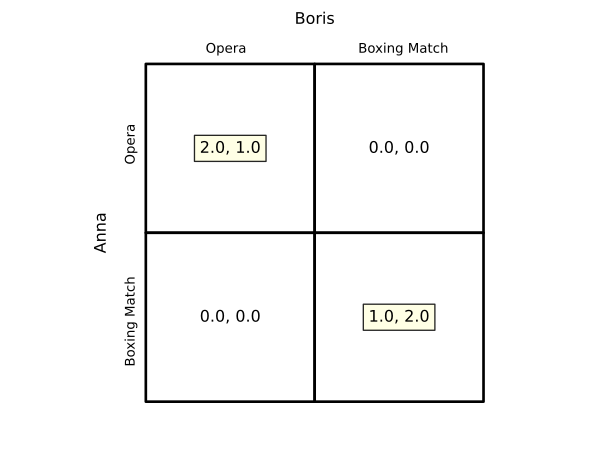
Game comes with constructors for common games. The battle_of_the_sexes
method returns the classic coordination game with players Anna and Boris
and actions Opera and Boxing Match already labeled. The table below was
created with usetex=False so that best responses are highlighted with
colored boxes on the payoff entries themselves.
In this version, Boris prefers the boxing match while Anna prefers the opera.
from freeride.games import Game

ax = Game.battle_of_the_sexes().table()
ax.figure.savefig("battle_of_the_sexes.svg", transparent=True)
plt.close(ax.figure)
Prisoner’s Dilemma Example#
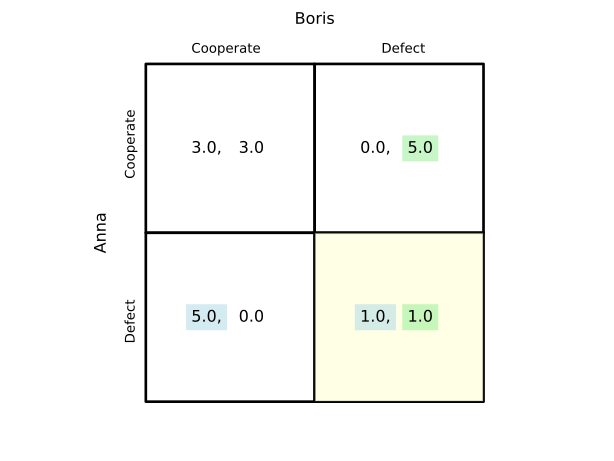
The prisoner’s dilemma captures the tension between individual and collective interest. Mutual cooperation is Pareto efficient but each player has an incentive to defect.
from freeride.games import Game

ax = Game.prisoners_dilemma().table()
ax.figure.savefig("prisoners_dilemma.svg", transparent=True)
plt.close(ax.figure)
Matching Pennies Example#
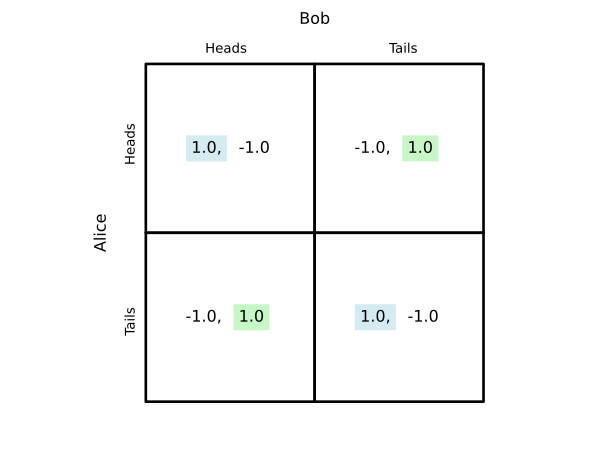
Matching pennies is a zero‑sum game with no pure strategy equilibrium. Each player wants to match or mismatch the other’s choice.
from freeride.games import Game

ax = Game.matching_pennies().table()
ax.figure.savefig("matching_pennies.svg", transparent=True)
plt.close(ax.figure)
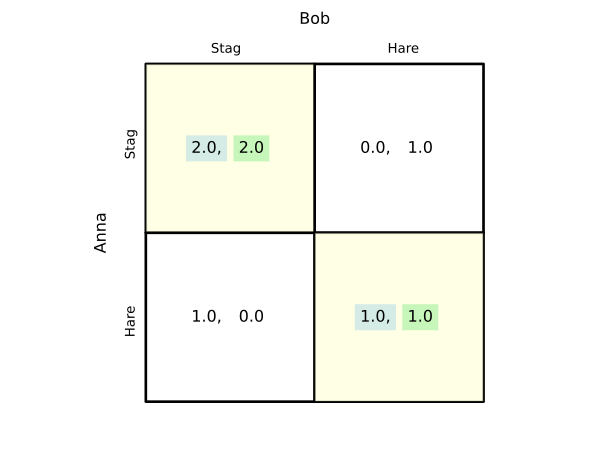
Stag Hunt Example#
The stag hunt models coordination with a safe action (hunting hare) and a potentially higher payoff from mutual cooperation (hunting stag).
from freeride.games import Game

ax = Game.stag_hunt().table()
ax.figure.savefig("stag_hunt.svg", transparent=True)
plt.close(ax.figure)
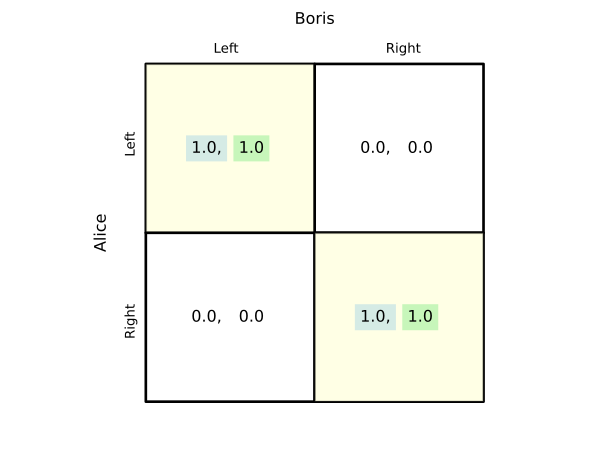
Pure Coordination Example#
This simple coordination game rewards players for choosing the same action.
from freeride.games import Game

ax = Game.pure_coordination().table()
ax.figure.savefig("pure_coordination.svg", transparent=True)
plt.close(ax.figure)
Chicken Example#
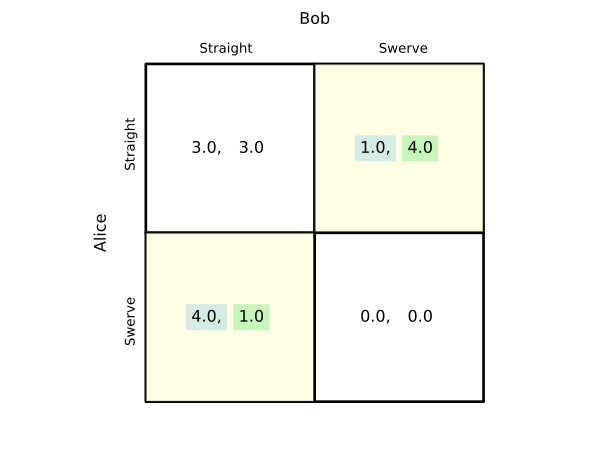
The game of chicken (or hawk–dove) illustrates the conflict between standing firm and yielding.
from freeride.games import Game

ax = Game.chicken().table()
ax.figure.savefig("chicken.svg", transparent=True)
plt.close(ax.figure)